 |
| When bored, you can replace AOL with LOL everywhere it appears on the AOL site for a great deal of amusement. |
To be quite honest, I hadn't heard about AOL or even thought about AOL in quite a long time but an article today informed me that it turns out they're actually making quite a bit of money. AOL (known as America Online in yesteryear) has recently made a business model out of purchasing content companies such as the Huffington Post and other news outlets. But as it turns out, this isn't primarily where their profit is coming from.
According to AOL's most recent earnings report, most of their profits come from what they call the "Membership Group". You can find the breakdown of their profits organized into a more compact form by Matthew Iglesias over at Vox that I'm showing below:
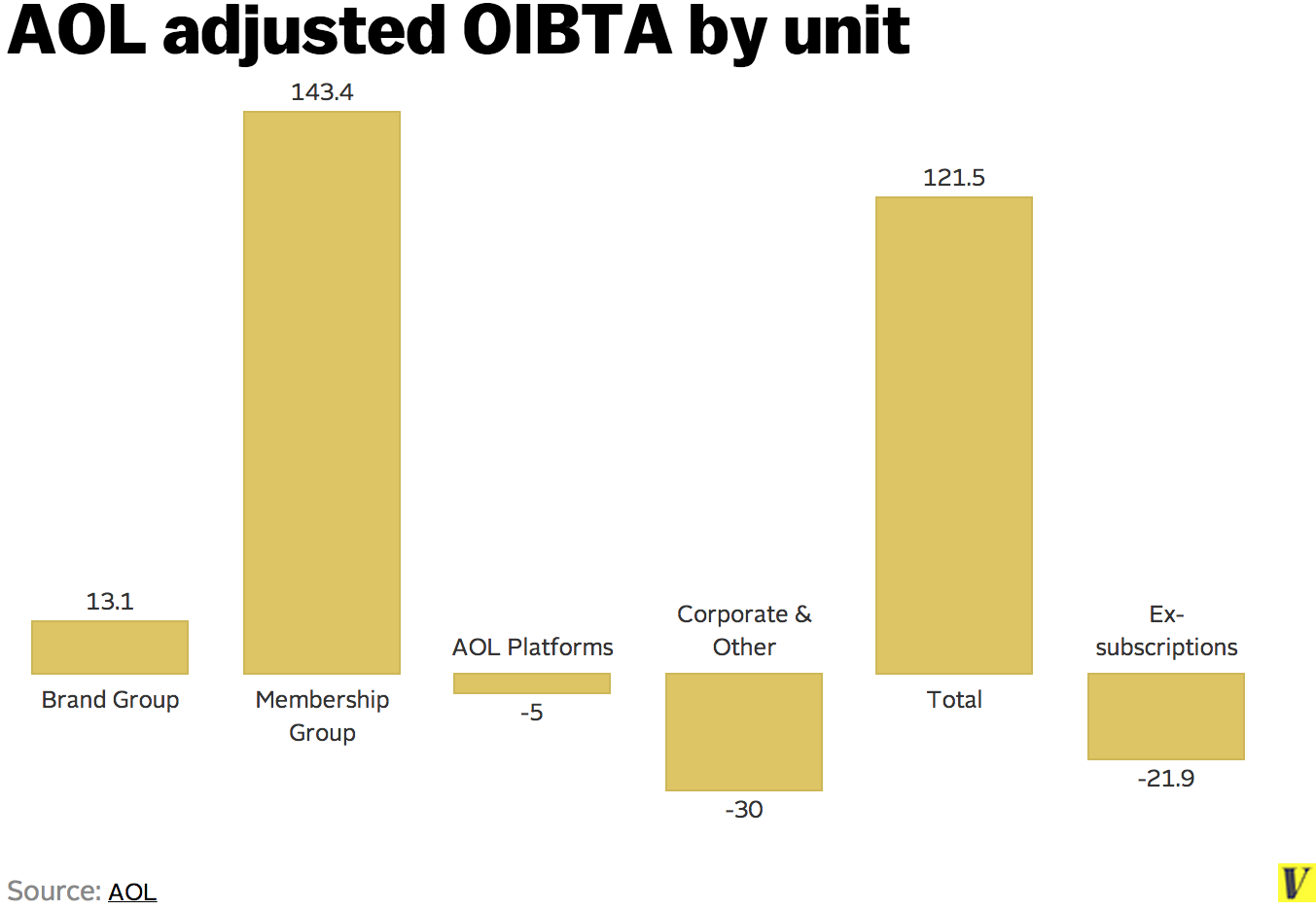
Iglesias attributes these large profits to people who simply forgot to cancel their AOL subscriptions even though they haven't touched a dial-up modem in years. It is true that the number of households in the US that still use dialup is at a record low of 3%, but that isn't necessarily the only service they provide any more.
If you take a look at the benefits for signing up for an AOL subscription, membership in AARP (only if you're old enough of course) is listed on every plan and the other "features" are grouped into services that either protect your identity, give you "membership deals", offer some sort of convince, or protect your computer. At the bottom of that list is of course dial-up internet access but that service is not what is prominently advertised. Of course most of these things are either available for free in another form or simply aren't of any real value to anybody, but history tells us that people will always succeed at selling us stuff we don't need.
To me, it appears that the success of the AOL subscription model is not to provide dial-up internet access, but to also provide services that are overwhelming geared towards technically challenged (or illiterate) individuals, namely the elderly. The AOL plans bill themselves as aids to navigating the internet safely and simply, which, as any person who has helped a senior citizen with their tech needs knows, is one of their biggest concerns. These users are also probably less aware of free alternatives, rely on brands they "trust", and really don't know how to evaluate the costs and benefits of these services.
That said, AOL is currently losing subscribers and the rate just keeps increasing so people in general don't want what AOL has to offer. My guess is that AOL subscribers are more afraid of changing their habits in an uncertain wired[/wireless] world than spending between $7 and $26 per month and potentially losing some semblance of familiarity. Either way, this isn't a sustainable business model for them.

No comments:
Post a Comment